History
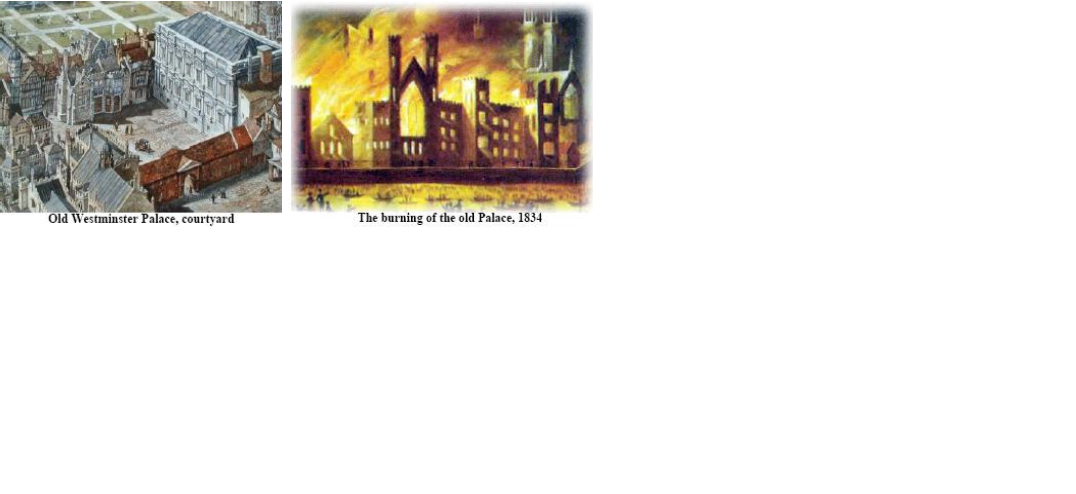
The old Palace of Westminster was destroyed by fire . On the night of October 16, 1834 . It is said that Charles Barry , an architect , was planning to return to London from Brighton , where he designed a church. After the destruction of the buildings , a contest was held with who is hot beautiful and had the best design of a church , Charles Barry's won . The dials were up to thirty feet in diameter . Invited Barry Benjamin Lewis Vulliamy a clockmaker to submit with a good name . Draft Vulliamy was happy for the clockmaker to do something for him . Subsequently, the Astronomer Royal , Sir George Airy , who was appointed as referee for the new clock that produced a specification in 1846 . There were important requirements of the specification . Tenders were invited and received from three makers , Dent , Vulliamy and Whitehurst .
The problems
The first of the problems arose when it was discovered that the architect had failed to make the tower. Necessary provision for Denison clock certainly had the ability to propel the project . Edward John Dent died in 1853 and the clock mechanism was completed by his stepson Frederick Rippon ( who changed his name to Frederick Dent ) . In 1854 the mechanism was ready to be installed in the tower but this was not possible because the tower was incomplete . Denison was thus able to devote to the escapement mechanism as used in the workplace of the Dent 's for several years. Testing different types It was during this period that he makes to keep the double three-legged gravity escapement clock that such an accurate time . Denison was also invited to the casting of bells to produce a specification. Before and referee , the contract was let to John Warner and Sons in 1856 threw the clock . The tower was not ready to get in that episode was the New Palace Yard mounted where it was made for the benefit of the public. Regularly use this bell weighed about 16 tons , which was two tons heavier than intended . In order to compensate for this, Denison increased the weight of the ball hammer 4-6 cwt . This was not a wise move , and a year later in 1857 , the great bell cracked beyond repair while being hit by a hammer . Denison announced the casting as defective , but producers denied this and claimed that it was his fault for using too heavy hammer . George Mears of the Whitechapel Bell Foundry was commissioned to the rearrangement of the metal of the old bell in 1858 , and he produced a clock with a weight of 13.5 tonnes which today is a successful operation. The four quarter bells were cast by Warners .
The name 'Big Ben ' was first applied to the original hour clock by Warners . There is no hard evidence of the origin of this name , but it may be derived from Sir Benjamin Hall , commissioner of works involved in the project and who was a man of considerable size . The name was also applied to the rescheduling hour bell and has since come to not only the bubble , but the clock and bell tower giving